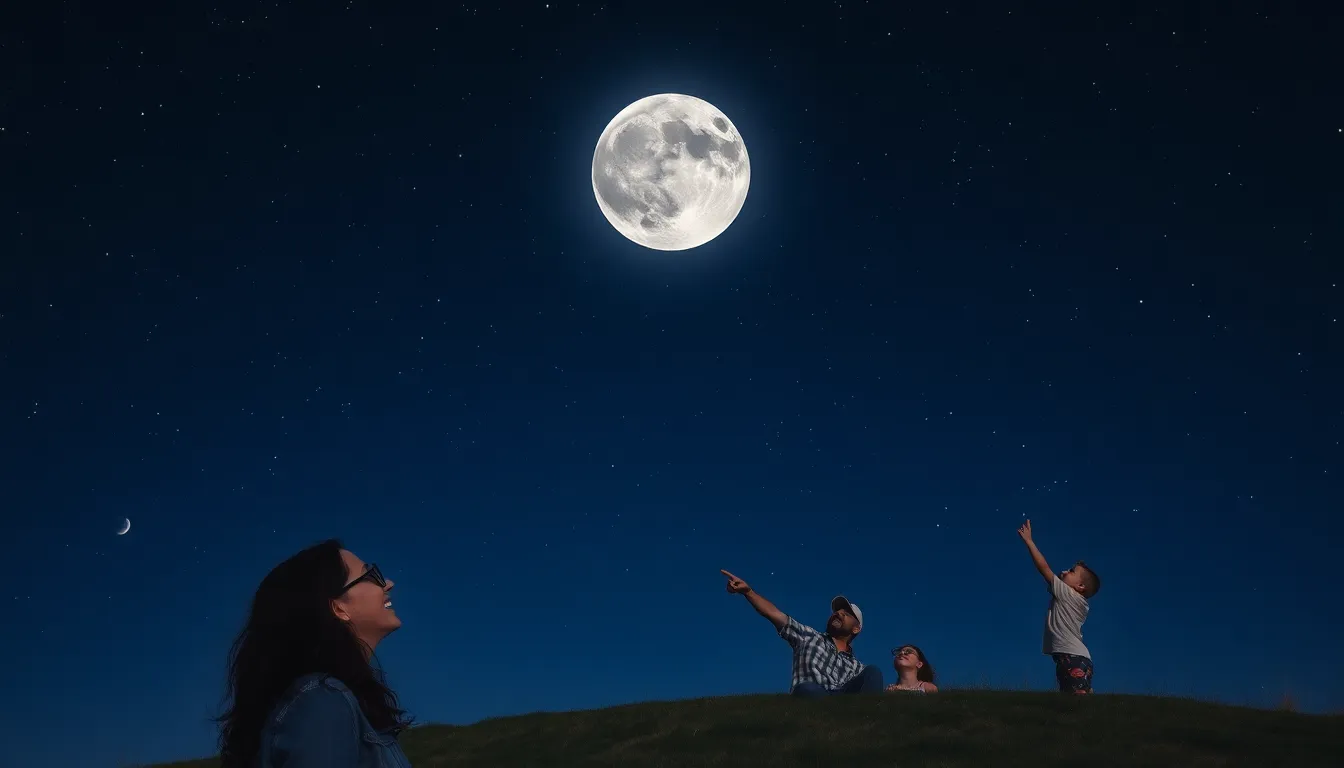
Imagine stepping outside one night and spotting not one but two moons lighting up the sky. Sounds like a sci-fi movie, right? But with the buzz about a potential second moon, stargazers everywhere are asking: will this celestial phenomenon actually be visible?
Overview of the Second Moon Phenomenon
The second moon phenomenon refers to the hypothetical appearance of an additional natural satellite orbiting Earth. Recent studies suggest certain conditions could allow for such a lunar body to become visible. Astronomers consider various factors, including gravitational influences and the potential for asteroid capture.
Stargazers often express excitement about a second moon, envisioning its impact on tides and nighttime illumination. Observations from telescopes and space missions contribute to understanding celestial mechanics. Recent simulations illustrate how a second moon might orbit Earth, revealing unique dynamics between lunar bodies.
Visibility rests on several conditions. The object’s size, distance, and reflectivity directly affect human perception. Larger moons would offer brighter visibility, while those further away could appear as mere specks. Interest in this topic has surged, evidenced by online discussions.
Scientific commentary emphasizes the rarity of celestial phenomena like this. Historical records mention objects resembling a second moon, though most proved to be temporary, such as captured asteroids. Current research involves surveying potential candidates that might enter Earth’s orbit.
Future missions could reveal more about this phenomenon. Scientists plan advanced telescopic observations to track transitory objects that may reach Earth’s vicinity. Each discovery adds to ongoing inquiries, enhancing public curiosity about the night sky.
The second moon phenomenon captivates both experts and enthusiasts, merging scientific inquiry with imaginative speculation. Understanding its visibility hinges on ongoing research and observations from the broader astronomical community.
Understanding the Concept of a Second Moon
The idea of a second moon fascinates many and stirs discussions within the scientific community.
Historical Context
Historical records reveal instances of objects that may resemble a second moon. Ancient texts sometimes describe temporary celestial bodies that appeared near Earth. Notably, instances of captured asteroids, like 1991 VG, provided glimpses of what a second moon could look like. Observations from the late 19th and early 20th centuries also noted phenomena resembling additional lunar bodies, albeit these were usually short-lived. Human curiosity has always sparked interest in celestial events that seem extraordinary. The blend of folklore and scientific inquiry illustrates a long-standing fascination with the possibility of a second moon.
Scientific Explanation
Scientific research delves into the mechanics behind the potential existence of a second moon. Understanding gravitational influences plays a crucial role in this inquiry. It examines how objects can be captured into Earth’s orbit under specific conditions. Factors such as size, mass, and distance from Earth determine visibility. Asteroids, particularly, have the potential to achieve this orbit if their paths align favorably. Astronomers actively study known celestial objects that might become second moons, focusing on their characteristics and trajectories. Ongoing observations aim to identify transitory bodies that may approach Earth, enhancing comprehension of their possible implications.
Visibility Factors
The visibility of a second moon relies on several key factors, impacting when and how observers can see this celestial phenomenon.
Location and Timing
Observers must consider the moon’s placement in the sky for optimal visibility. Viewing opportunities arise during specific phases, particularly around new moons when the main moon’s light is minimal. Stargazers near the equator gain better chances due to the moon’s trajectory. Additionally, timing plays a crucial role; evenings or early mornings present favorable windows as the moon is higher in the sky. Observing conditions drastically change based on the Earth’s rotation and orbit, making awareness of these elements essential for anyone hoping to catch a glimpse.
Atmospheric Conditions
Atmospheric clarity significantly affects visibility. Clear skies maximize chances, while clouds, humidity, and light pollution reduce visibility. Atmospheric turbulence can distort the image, making it harder to spot distant celestial bodies. Light pollution, common in urban areas, also hampers clear observation. For the best experience, seeking locations away from urban light and pollution is vital. Change in temperatures and weather conditions can influence visibility, so attention to local forecasts enhances the likelihood of viewing this hypothetical second moon.
Observational Opportunities
Stargazers eager to witness the potential second moon must consider various factors for optimal observation.
Tools for Observation
Telescopes provide enhanced visibility, allowing detailed views of celestial objects. Binoculars offer a more portable option, enabling casual observers to enjoy the night sky. Sky apps assist in tracking celestial events and assist with identifying specific locations for observation. Additionally, professional observatories contribute valuable data and insights on lunar phenomena.
Notable Events to Watch For
Timing plays a crucial role in witnessing the second moon phenomenon. Expect optimal visibility during new moons, when the main moon is less prominent. Key events also include meteor showers, which often coincide with clear skies and invite more stargazers to look up. Rare alignments or close encounters with asteroids may create additional opportunities for observation. Keep an eye on astronomy calendars to stay updated on significant dates that promise captivating views.
Implications of a Second Moon
A second moon’s appearance could influence various aspects of life on Earth. One notable implication involves its potential cultural significance, enriching human storytelling and mythology.
Cultural Significance
Many cultures have revered the moon, associating it with various myths and legends. A second moon might inspire new narratives, spawning art, literature, and folklore. Festivals could emerge, celebrating this celestial phenomenon, similar to how ancient civilizations honored lunar cycles. Moreover, human connection to the cosmos could deepen, prompting spiritual and philosophical reflections. Changes in art and expression may arise as people capture their experiences and perspectives of a new moonlit sky.
Astronomical Impact
The arrival of a second moon may also yield significant astronomical impacts. Tidal forces could shift, altering ocean currents and ecosystems. A change in lunar gravity might influence wildlife behaviors, particularly in species reliant on moonlight for navigation or reproduction. Additionally, the second moon’s gravitational effects could modify Earth’s axial tilt, impacting seasonal weather patterns. Observatories might experience increased interest in orbital dynamics, spurring research collaborations and technological advancements in tracking celestial movements. Enhanced understanding of our solar system follows, with potential discoveries affecting future exploration missions.
The prospect of a second moon captivating the night sky offers a blend of scientific curiosity and imaginative wonder. As astronomers continue to investigate the conditions that could make this phenomenon visible, stargazers remain hopeful for a chance to witness something extraordinary.
With the right timing and clear skies, opportunities for observation may arise. The excitement surrounding this potential celestial event not only fuels public interest but also encourages further research into our universe. Whether it becomes a reality or remains a tantalizing possibility, the idea of a second moon reminds everyone of the beauty and mystery that the cosmos holds.